Identification
Samples, marks and recent sightings help distinguish the pest affecting the Edmonton premises.
Local London pest control
Edmonton contains a mix of property types, so a postcode alone cannot define the right pest-control plan. Tell us what you have seen, where it appears and how the building is used; that information helps us plan an inspection without making unsupported assumptions about the area.
Mixed residential pest control
Mixed houses, flats, estates and district-centre premises. We use this as property context, not as a claim about local pest levels. The treatment plan is based on identification, access, occupants, the extent of activity and any route that can be supported by evidence.
A mixed residential area can include terraces, flats, estates, shops and newer developments. We therefore avoid a one-size-fits-all assumption. The technician uses the evidence and layout to define the inspection and treatment.
Note the room or area, time of day, visible signs and whether the activity appears in any shared space. A short, accurate description helps us plan the right first visit.
Inspection first
In Edmonton, we compare evidence, accessible routes and property use so the work fits the varied residential property.
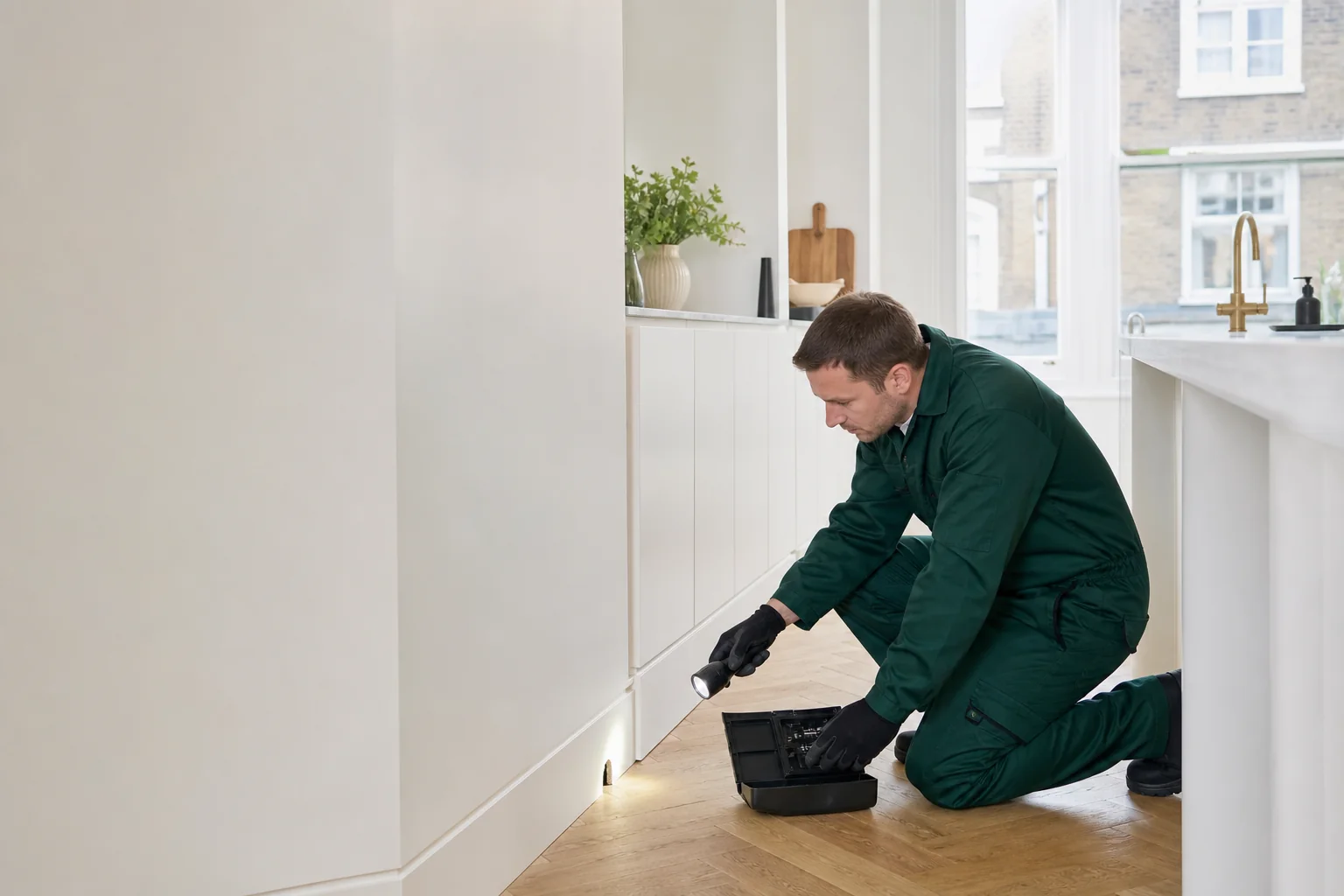
Samples, marks and recent sightings help distinguish the pest affecting the Edmonton premises.
Service entries and shared boundaries around the Edmonton premises are assessed where relevant.
Urgent treatment and optional improvements at the Edmonton premises are identified separately.
Relevant services
The right service depends on the evidence. If you are unsure which pest is present, start with a pest inspection rather than selecting a treatment by guesswork.
During the appointment
Where the pest is known, the visit can focus on its likely harbourage and route. Where the signs are uncertain, inspection avoids selecting a service by guesswork. Occupants, pets, access and previous treatment are considered before the scope is agreed.
Keep the affected and adjoining areas accessible. Show photographs, samples or dates of sightings where available, and mention children, pets, allergies, previous treatments and any access controlled by someone else.
Transparent starting points
Price depends on the pest, property size and layout, access, treatment method, infestation extent, follow-up and any agreed proofing. These London-wide starting prices are not changed simply because of the area.
Preparation and prevention
Tell us what you have seen, where and when. Keep the affected areas accessible and avoid removing every trace before the visit.
After treatment, follow the written cleaning, access and monitoring instructions. Prevention may include food and waste management, repairs, proofing or cooperation from another part of the building. We will distinguish essential actions from optional improvements.
Aftercare and follow-up
For premises in Edmonton, share relevant aftercare with occupants or staff and keep treatment records available for any planned review.
For shared buildings in Edmonton, pass communal findings to the landlord or manager while continuing the private aftercare already agreed.
Practical answers
These answers reflect the property context for this page. The technician will confirm advice for your specific building and pest.
Yes. When the species is uncertain at a Edmonton property, book an inspection rather than choosing treatment by guesswork. Photographs, safely retained samples and a clear description of the location can help the technician prepare.
For a Edmonton booking, describe what you saw, the affected room or outdoor area, when the signs appear, the property type and any product already used. Mention pets, children and access controlled by a landlord or building manager.
Many treatments can be planned for occupied premises in Edmonton, but the exact preparation and re-entry rules depend on the pest and method. Tell the team about every resident, pet, allergy and sensitive area before work starts.
The agreed inspection in Edmonton can cover the affected room and other safely accessible spaces linked to the signs, such as cupboards, lofts, basements, garages or external service entries. Unrelated areas are not treated automatically.
Phone-first local help