Identification
Samples, marks and recent sightings help distinguish the pest affecting the Archway premises.
Local London pest control
Pest control in Archway needs to account for residential and commercial space sharing the same streets and, in some cases, the same building. Flats, offices, shops and hospitality premises can involve different access arrangements, working hours and responsibilities, so we begin with the signs present and the part of the property that can be inspected.
Central London mixed-use property
District-centre activity with flats, shops and older residential streets. This built-environment context affects access and inspection scope rather than proving that any particular pest is present. We check evidence, likely harbourage, food and waste conditions and connected service routes before recommending treatment.
Homes, offices, shops and hospitality premises can sit within the same block. That makes access, waste, storage and shared service routes relevant to the inspection. We treat the area you control and explain clearly when another occupier, landlord or managing agent may need to address a connected part of the building.
Note the room or area, time of day, visible signs and whether the activity appears in any shared space. A short, accurate description helps us plan the right first visit.
Relevant services
The right service depends on the evidence. If you are unsure which pest is present, start with a pest inspection rather than selecting a treatment by guesswork.
Inspection first
The technician checks evidence at your Archway address, focusing on areas connected to reported activity.
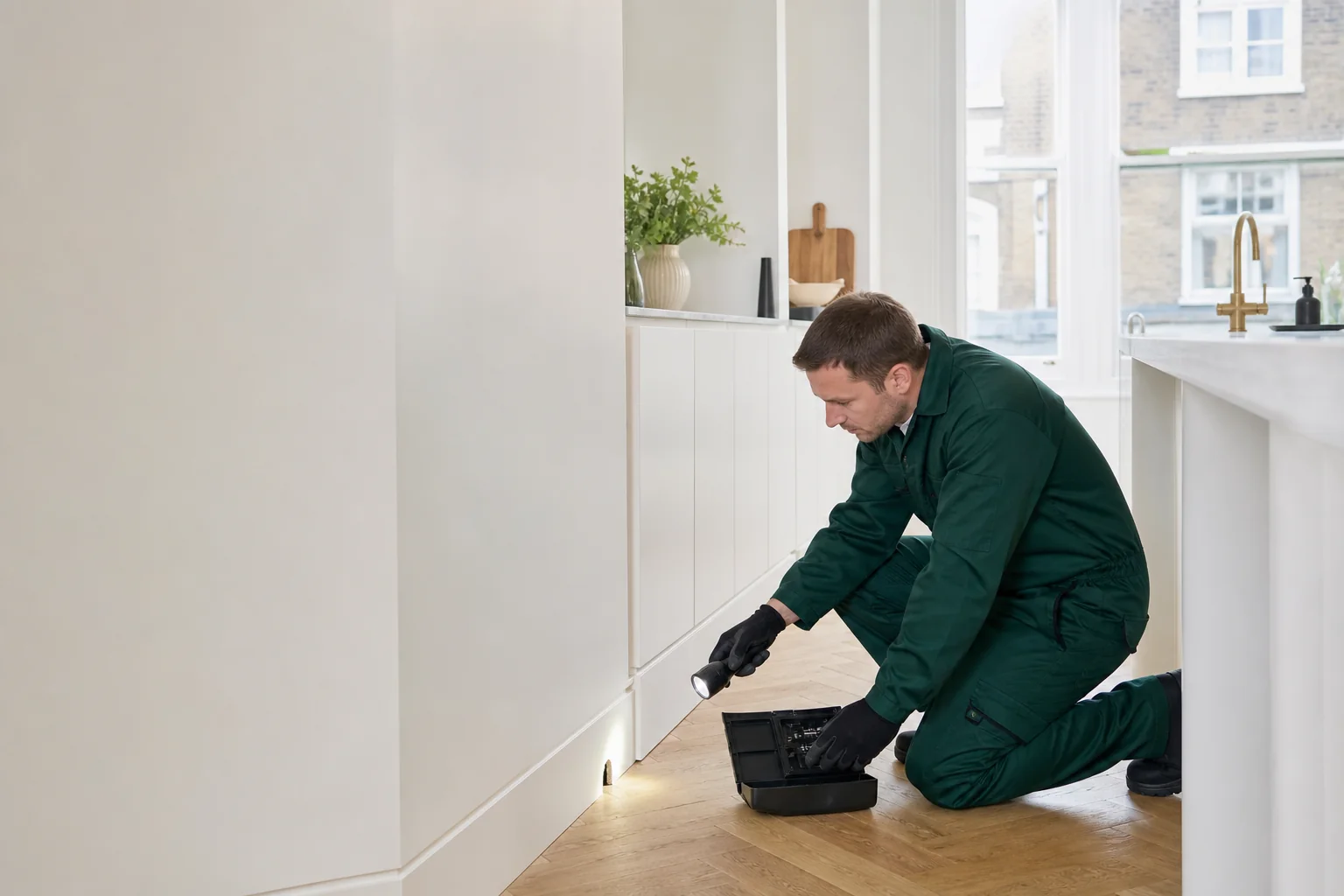
Samples, marks and recent sightings help distinguish the pest affecting the Archway premises.
Service entries and shared boundaries around the Archway premises are assessed where relevant.
Urgent treatment and optional improvements at the Archway premises are identified separately.
During the appointment
Tell us which areas are residential, customer-facing, used for food or controlled by another occupier. The technician confirms the accessible scope, records signs and explains whether work can proceed immediately or whether identification, monitoring or wider access should come first.
Keep the affected and adjoining areas accessible. Show photographs, samples or dates of sightings where available, and mention children, pets, allergies, previous treatments and any access controlled by someone else.
Transparent starting points
Price depends on the pest, property size and layout, access, treatment method, infestation extent, follow-up and any agreed proofing. These London-wide starting prices are not changed simply because of the area.
Preparation and prevention
For mixed-use property, tell us how each affected area is used and when access is possible. Keep stock, food, pets and sensitive equipment in mind when following the preparation instructions.
After treatment, follow the written cleaning, access and monitoring instructions. Prevention may include food and waste management, repairs, proofing or cooperation from another part of the building. We will distinguish essential actions from optional improvements.
Aftercare and follow-up
At your Archway property, observe the affected area without adding unapproved products that could disturb monitoring or change pest behaviour.
Further activity at a Archway address may indicate eggs, hidden harbourage or a route outside the inspected area and should be reviewed.
Practical answers
These answers reflect the property context for this page. The technician will confirm advice for your specific building and pest.
A Archway quotation depends on the pest, accessible area, treatment method, infestation extent, monitoring, follow-up and any agreed proofing. The expected work and price should be explained before additional treatment begins.
They may need to be involved at a Archway address when evidence points to a communal room, service riser, adjoining unit or repair outside the occupant’s control. The technician should distinguish private treatment from wider building action.
Yes. At a Archway property, identification and accessible evidence guide the treatment choice. The technician may check droppings, damage, harbourage, food or water sources and relevant entry routes before agreeing the practical scope.
Record where and when fresh signs appear at the Archway address and follow the written aftercare instructions. Some pests need monitoring or a planned return visit, while continuing activity from an inaccessible shared route may need separate access.
Phone-first local help