Species
Visible clues at the Sidcup address guide identification without relying on assumptions.
Local London pest control
Homes in Sidcup may need checks beyond the affected room, including gardens, sheds, garages, lofts and external service entries where they are relevant and safely accessible. The aim is to distinguish indoor activity from an outdoor sighting and choose treatment only after the likely source is understood.
Family homes, gardens and outbuildings
Family houses, gardens and a district-centre high street. External signs are considered alongside indoor damage, droppings, noise or insect activity. This prevents unnecessary indoor treatment when the issue is outdoors and helps identify vulnerable routes when the property is being entered.
Gardens, sheds, garages and roof lines can all affect activity inside a house. The inspection considers where the pest is feeding, nesting or travelling and whether the signs are confined outdoors. That helps avoid unnecessary indoor treatment.
Note the room or area, time of day, visible signs and whether the activity appears in any shared space. A short, accurate description helps us plan the right first visit.
Relevant services
The right service depends on the evidence. If you are unsure which pest is present, start with a pest inspection rather than selecting a treatment by guesswork.
Inspection first
In Sidcup, we compare evidence, accessible routes and property use so the work fits the homes with outdoor space.
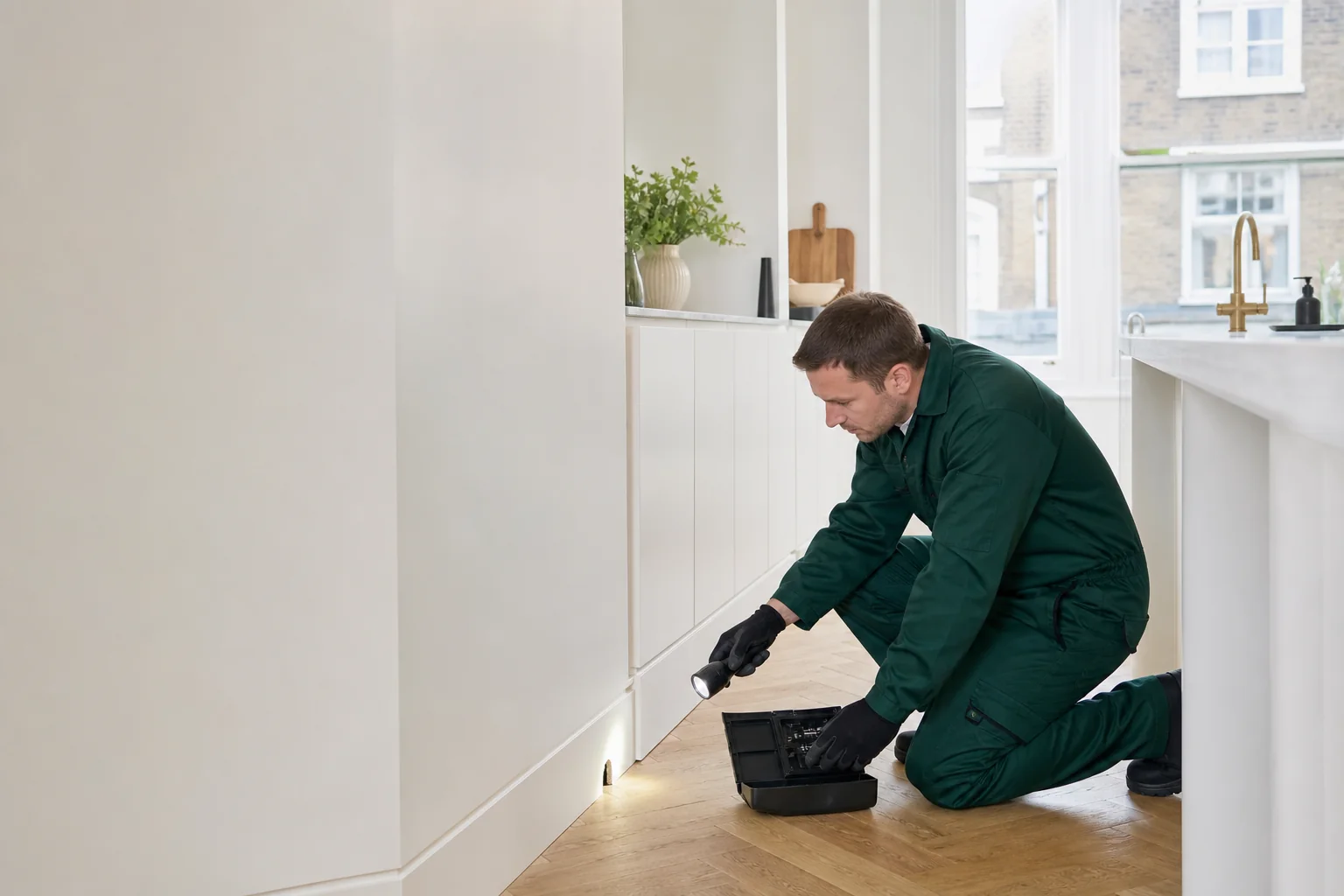
Visible clues at the Sidcup address guide identification without relying on assumptions.
Relevant gaps, services and sheltered spaces are checked for connections within the Sidcup property.
We explain which accessible parts of the Sidcup property require action and which do not.
During the appointment
A technician may check the room where signs appear, then an accessible loft, garage, shed, garden edge or external service entry when it relates to the problem. Areas without supporting evidence are not automatically treated, keeping the work focused and proportionate.
Keep the affected and adjoining areas accessible. Show photographs, samples or dates of sightings where available, and mention children, pets, allergies, previous treatments and any access controlled by someone else.
Transparent starting points
Price depends on the pest, property size and layout, access, treatment method, infestation extent, follow-up and any agreed proofing. These London-wide starting prices are not changed simply because of the area.
Preparation and prevention
Trim access only where it can be done safely, keep pets away from affected areas and show the technician every place where activity has been noticed.
After treatment, follow the written cleaning, access and monitoring instructions. Prevention may include food and waste management, repairs, proofing or cooperation from another part of the building. We will distinguish essential actions from optional improvements.
Aftercare and follow-up
Following treatment in Sidcup, protect monitoring devices, complete priority repairs in order and report new evidence before removing it.
Further activity at a Sidcup address may indicate eggs, hidden harbourage or a route outside the inspected area and should be reviewed.
Practical answers
These answers reflect the property context for this page. The technician will confirm advice for your specific building and pest.
Many treatments can be planned for occupied premises in Sidcup, but the exact preparation and re-entry rules depend on the pest and method. Tell the team about every resident, pet, allergy and sensitive area before work starts.
The agreed inspection in Sidcup can cover the affected room and other safely accessible spaces linked to the signs, such as cupboards, lofts, basements, garages or external service entries. Unrelated areas are not treated automatically.
A Sidcup quotation depends on the pest, accessible area, treatment method, infestation extent, monitoring, follow-up and any agreed proofing. The expected work and price should be explained before additional treatment begins.
They may need to be involved at a Sidcup address when evidence points to a communal room, service riser, adjoining unit or repair outside the occupant’s control. The technician should distinguish private treatment from wider building action.
Yes. At a Sidcup property, identification and accessible evidence guide the treatment choice. The technician may check droppings, damage, harbourage, food or water sources and relevant entry routes before agreeing the practical scope.
Record where and when fresh signs appear at the Sidcup address and follow the written aftercare instructions. Some pests need monitoring or a planned return visit, while continuing activity from an inaccessible shared route may need separate access.
Phone-first local help