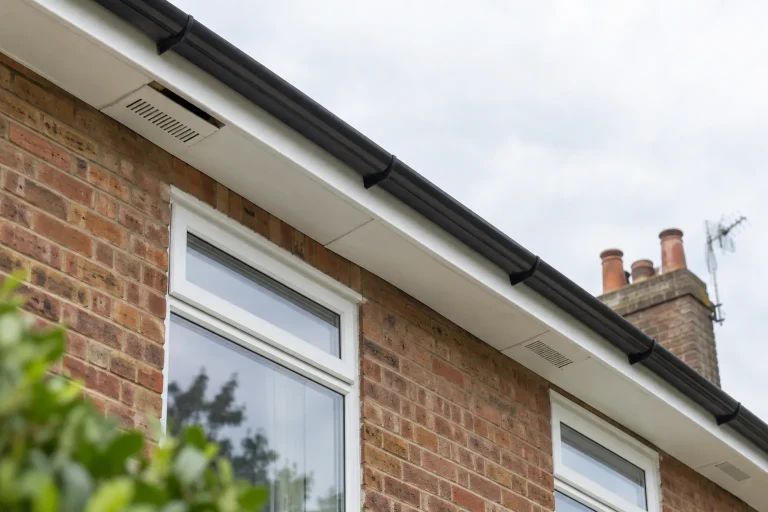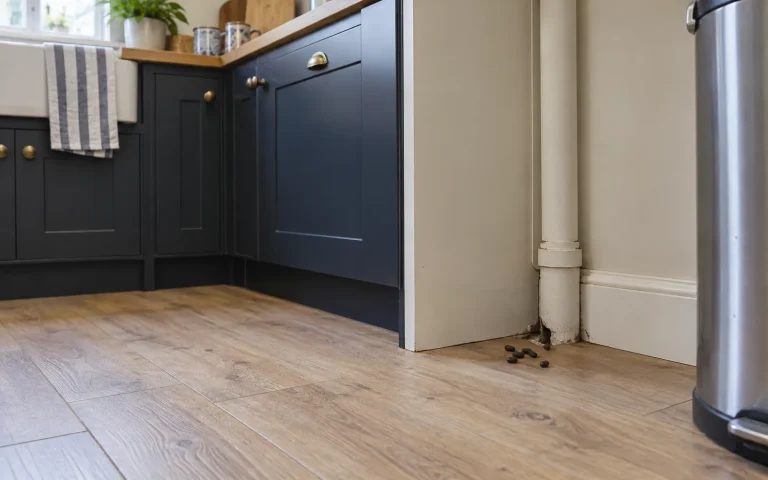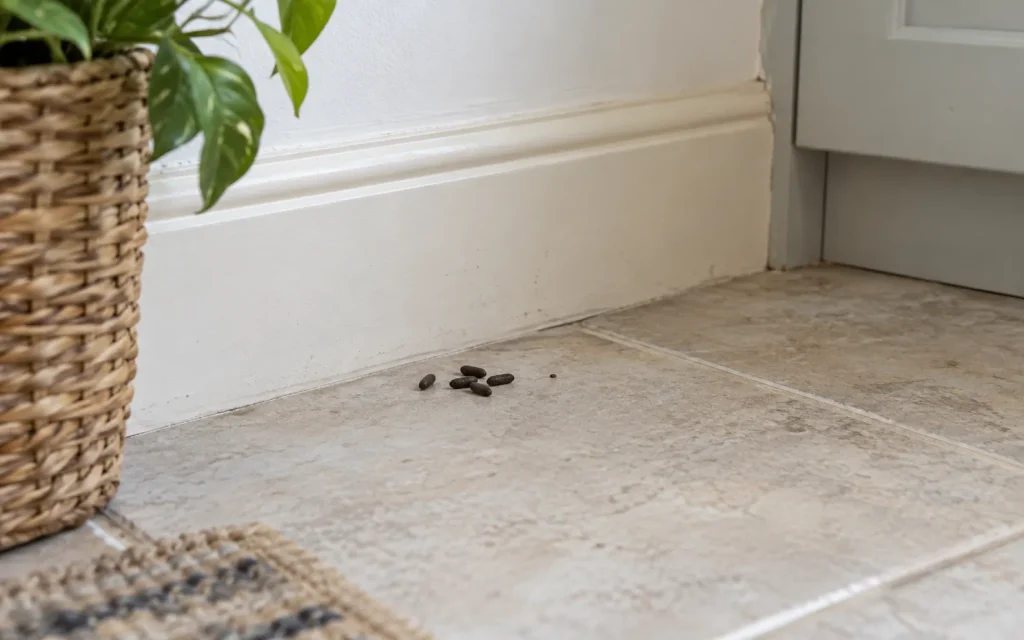
Finding dark pellets behind a cupboard is unpleasant, and the first question is often whether they came from a rat or a mouse. Size and shape can help, but neither is a perfect test. Young rats leave smaller droppings than adults, damp surfaces change their appearance, and an old mark tells you little about what is active today. A useful identification combines what you can see with where it was found and what else has happened nearby.
The advice below is intended for observation from a safe distance. It is not a reason to pick up droppings with bare hands or disturb a dusty space. If you have substantial contamination, a shared building route or signs around food preparation, arrange a pest inspection rather than trying to identify every pellet yourself.
A rough size guide
Adult rat droppings are normally much larger than mouse droppings. Council guidance describes rat droppings as roughly 10–20 mm long and mouse droppings as only a few millimetres long. There is variation between animals and diets, so these figures are a guide, not a measurement that proves the species. A tiny dropping might be from a mouse, a young rat or something else entirely.
If a photograph is possible without touching the material, include an object that shows scale. A coin or ruler placed nearby can work, provided you do not put it on a contaminated surface and then handle it normally. A wider photograph showing the cupboard, skirting board or pipe entry is also helpful. It tells an inspector where the evidence was found and whether the spot connects with other signs.
The Cherwell District Council identification guide compares typical rat and mouse droppings and explains why distinguishing the animals affects the response. Treat any image guide as a starting point; it cannot inspect the property for you.
Shape and distribution offer more clues
Rat droppings are often described as spindle-shaped or capsule-like. Mouse droppings tend to be smaller and may look like dark grains of rice. In practice, a single pellet can be crushed, dried or partly hidden, which makes a neat visual comparison unreliable. Several undisturbed droppings are more informative than one isolated mark.
Location can be equally useful. Rodents commonly travel alongside walls and through sheltered spaces. You might find material behind appliances, along a cupboard edge, near a pipe opening or in a loft. A concentration in one place can point towards a regularly used route or resting area. Scattered droppings across several cupboards may suggest a different pattern. Neither pattern is conclusive, because the layout and cleaning routine affect what remains visible.
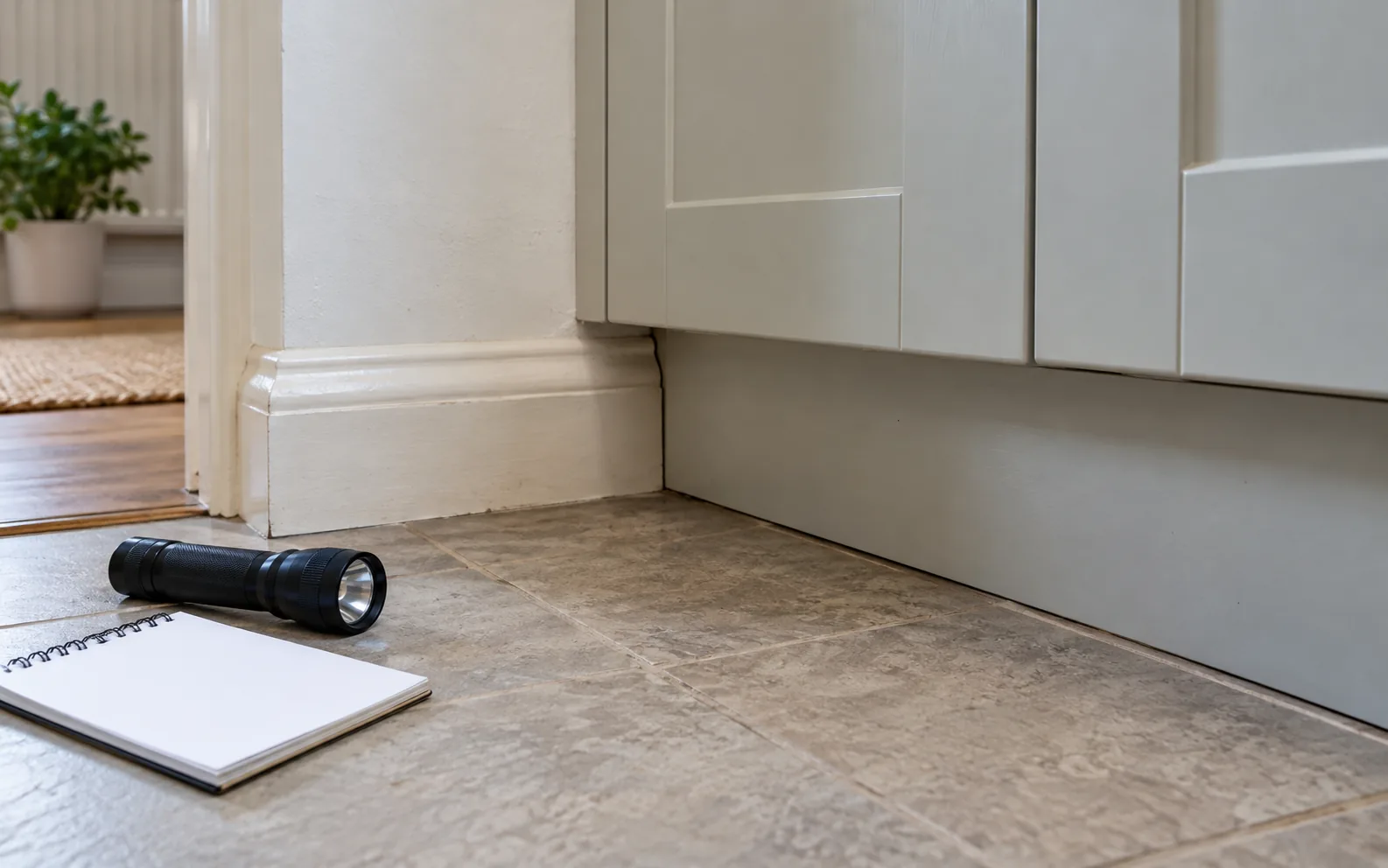
Keep a simple map of the evidence. Mark the position of each find on a sketch of the room, or label your photographs with the location and date. If fresh material appears after an area has been professionally or safely cleaned, the new position may help trace current movement. Avoid repeatedly disturbing the same area just to collect more evidence.
Fresh or old? Be cautious with appearances
Fresh droppings may look darker and softer; older ones often dry and dull. That is a general tendency, not a clock. Moisture, temperature, dust and cleaning products can change appearance. It is safer to say “first noticed on Tuesday” than “these are two days old”. You may know when you last cleaned a cupboard, but you usually do not know when the animal passed through.
The most persuasive evidence of current activity is a new sign in a place you had already documented. Take a photograph, leave the area as undisturbed as practical and note the time. If there is a live sighting, a fresh noise in the same route or newly damaged food packaging, tell the inspection team. Together, those clues carry more weight than colour alone.
Do not assume that all dark pellets are rodent droppings. Insect deposits, seeds, building debris and fragments from damaged materials can be mistaken for them. If the shape is uncertain, use a clear photograph and describe the context instead of confidently labelling the species.
Look beyond the droppings
Rats and mice can both leave gnaw marks, disturbed food, smears and sounds in concealed spaces. The size of an opening or tooth mark may support an identification, but old damage can remain long after activity stops. A door gap or pipe hole is a possible route; it is not proof that an animal is using it now.
If you have seen the animal, note the relative size, body shape and tail. A mouse is not simply a small rat. Adults differ in their proportions, although a brief glimpse in poor light is easy to misjudge. Do not chase an animal into a corner for a better look. A calm description of what you saw is enough to guide the next assessment.
Outside, signs around bins or a possible burrow may shift attention towards rats. Inside, very small droppings in several cupboards may suggest mice. These are working hypotheses. A technician can compare the whole pattern, check safe access routes and decide whether rat control or mice control is appropriate.
Handle the area safely
Keep children and pets away from droppings and contaminated food. Do not eat food from packaging that has been gnawed or visibly contaminated. Avoid sweeping or vacuuming dry droppings, especially in an enclosed, dusty area, because this can spread contaminated dust. If you need the area cleaned before a visit, seek suitable advice for the amount and setting involved; a large loft or heavily contaminated store is different from one mark on a washable surface.
Wear appropriate protection for any necessary cleaning, and follow the instructions of the cleaning products used. Never mix cleaning chemicals. If you are unsure how to manage a sizeable area, ask a professional to assess it. The location of droppings may still matter to the inspection, so photograph the signs before cleaning if that can be done safely.
If there is damage to wiring or a strong smell from an inaccessible space, treat those as separate building or electrical concerns. Pest identification does not make a cable safe or explain every odour. Keep clear of damaged electrical fittings and arrange the relevant trade assessment.
Why identification changes the plan
The purpose of identification is not to win a guessing game. It helps the person inspecting the property choose where to look and what to address. Rats and mice may use different routes, leave evidence in different patterns and require different proofing details. In a shared building, the route might cross into a communal riser or another area that you cannot access. Closing a visible gap without understanding the route may hide the real source or redirect activity.
Treatment should also be based on evidence, occupants and the property, rather than a packet chosen for the animal you think you have. The UK Health and Safety Executive's rodenticide guidance sets out why these products require careful use and why other controls form part of good pest management. Food storage, waste control, monitoring and property proofing may all be relevant after the species and route are clearer.
What to tell the inspector
You can give a useful account in a few sentences: where you found the droppings, how many areas are affected, when you first noticed them and whether fresh signs have appeared. Add any sound, sighting or damage, and explain what you have already cleaned or sealed. Mention pets, children, food preparation and any restricted access. Photographs of both close detail and the wider location save time.
If the evidence is too ambiguous to name the species, say so. An honest “small dark droppings near the kitchen waste pipe” is better than “definitely rats” when you are unsure. It allows the visit to start with identification and avoid a treatment chosen on a mistaken assumption.
The sensible next step is to record the signs without handling them, reduce easy access to food and arrange help if the evidence is fresh or repeated. Once the source is identified, control and proofing can target the route that matters.